
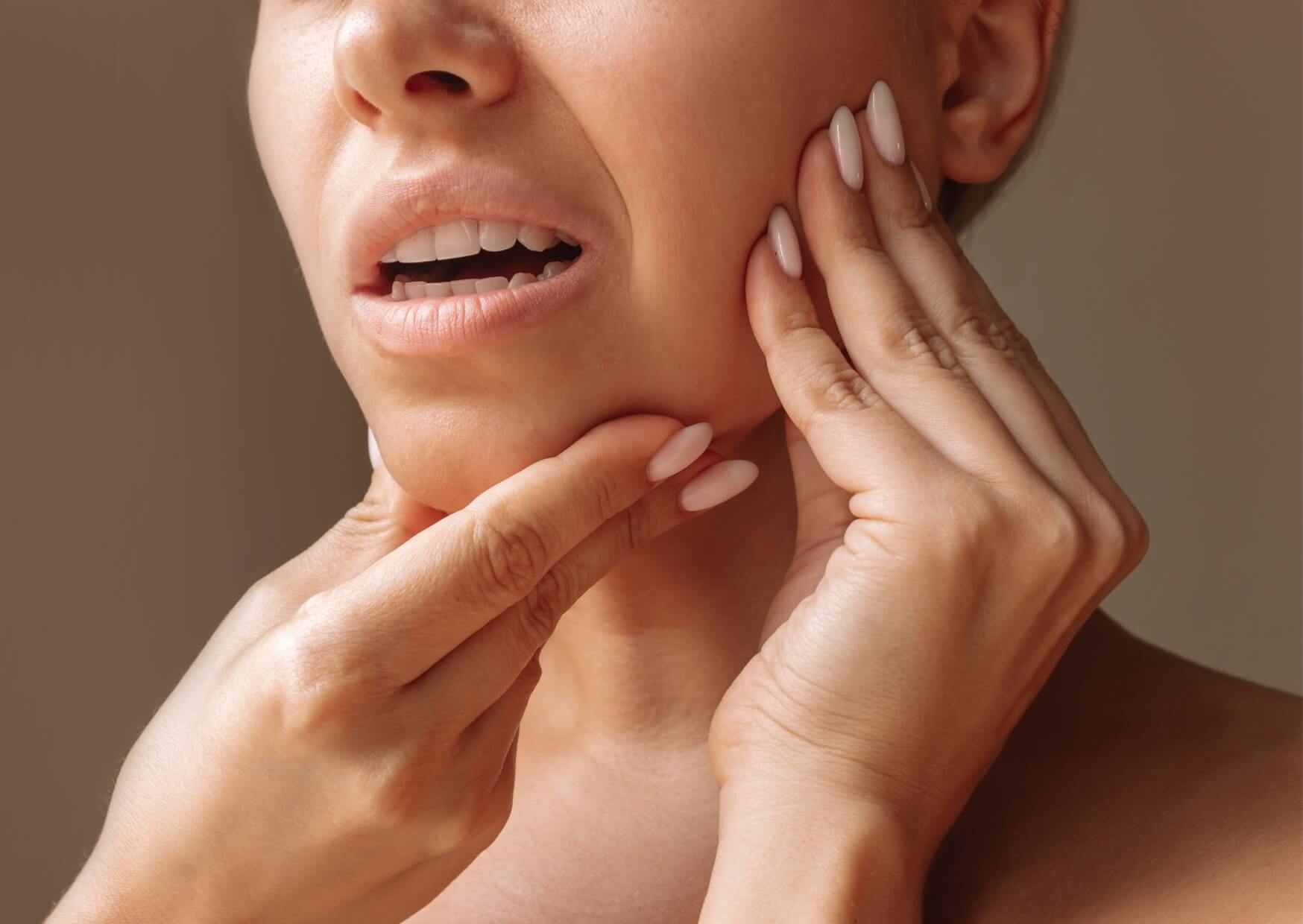
A clicking jaw while you chew usually comes from the temporomandibular joint, often called the TMJ. This joint connects your lower jaw to your skull and helps you open, close, and move your mouth side to side. If you want more background on the joint itself, see what TMJ is.
A clicking sound does not always mean something is seriously wrong. Some people have jaw noise without pain or trouble using the jaw, while others also develop stiffness, headaches, soreness, or difficulty chewing. For a broader overview of related conditions, read what TMD is.
At Supremia in Wake Forest, our TMJ treatment services focus on evaluating jaw clicking and related symptoms and provide the kind of care many patients are looking for.
What Jaw Clicking Usually Means
The jaw joint works like a sliding hinge. It includes bone, cartilage, muscles, ligaments, and a small disc that helps the joint move smoothly.
When that system is irritated or not moving evenly, clicking can happen. A common reason is disc displacement with reduction, which means the disc shifts slightly out of place and then moves back into position during jaw movement.
Jaw clicking can also be related to muscle tension, clenching, grinding, or changes in how your teeth fit together. In many cases, the sound matters less than symptoms like pain, locking, limited opening, or visible tooth wear.
Common Reasons Your Jaw Clicks When You Chew
Chewing puts repeated force on the jaw joint, so it often makes clicking more noticeable. Food texture and chewing more on one side can also bring out symptoms. If popping is your main concern, see how to fix jaw popping.
TMJ Disc Movement
The most common explanation is altered movement of the disc inside the jaw joint. If the disc is slightly out of alignment, the jaw may click as it moves over it.
Teeth Grinding or Clenching
Teeth grinding or clenching can overload the joint and surrounding muscles, especially during sleep or periods of stress. Over time, that strain may lead to clicking, morning soreness, temple tension, or tooth wear.
Muscle Tension and Jaw Overuse
Frequent gum chewing, nail biting, resting your chin on your hand, or often eating very tough foods can overwork the jaw muscles. Tight muscles can change how the jaw tracks when you open and close.
Bite Changes or Missing Teeth
If teeth are worn, broken, shifting, or missing, your bite may become less stable. That can change chewing patterns and place uneven pressure on the joint.
In some cases, longer-term alignment work such as physiologic orthodontics may help improve jaw tracking and reduce stress on the joint. In children, growth and development also affect bite and jaw alignment; see jaw development for more context.
Injury or Inflammation
A past injury to the jaw, long dental visits with the mouth open, or joint inflammation can also trigger clicking. In some cases, arthritis in the jaw joint may be involved, especially if stiffness or a grinding sensation is present.
When Jaw Clicking Is More Concerning
A jaw click without pain is often less urgent than a click that comes with other symptoms. The sound becomes more important when comfort or function changes.
Watch for jaw pain, locking, or limited mouth opening. These symptoms can point to a more significant joint or muscle problem and should not be ignored.
Other reasons to schedule an evaluation soon include:
- Clicking that is becoming more frequent or louder
- Pain with chewing, yawning, or talking
- Headaches, ear-area pressure, or facial soreness
- A bite that suddenly feels different
- Swelling near the joint
- A history of clenching, grinding, or jaw injury
Seek urgent care if your jaw becomes stuck open or closed, if there is major swelling, or if severe pain follows trauma. Those situations may need prompt assessment rather than routine monitoring.
How a Dentist Figures Out the Cause
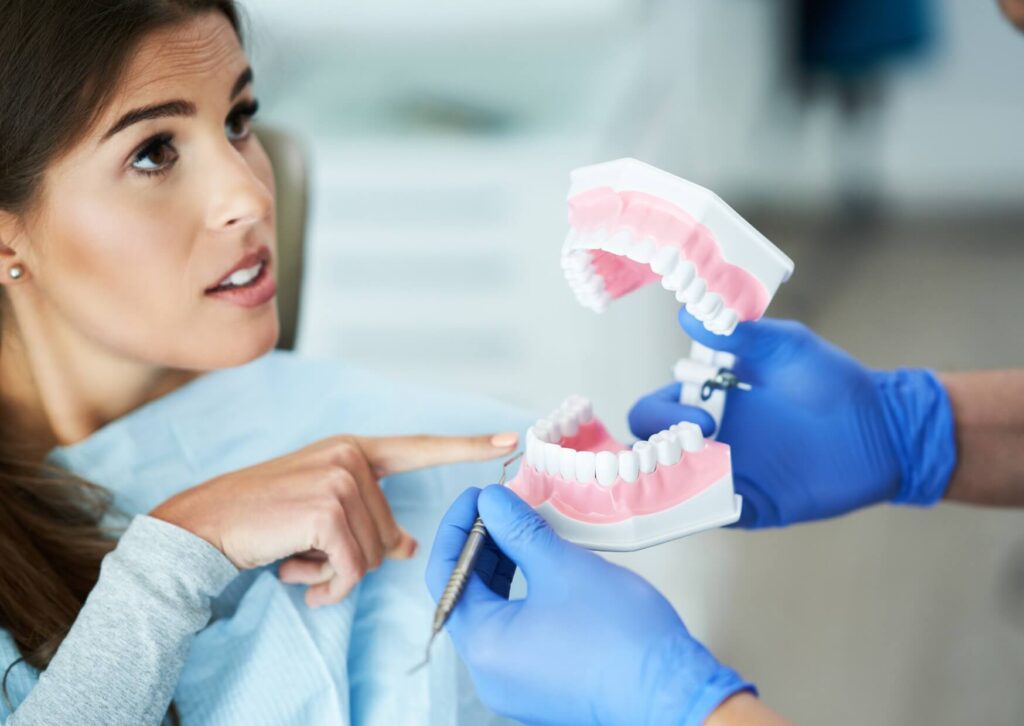
A good evaluation starts with the pattern of symptoms. A dentist will usually ask when the clicking started, whether it hurts, whether the jaw ever locks, and what chewing feels like with different foods.
The exam may include checking how wide you can open, whether the jaw shifts to one side, where the muscles feel tender, and whether the joint makes noise during movement. Your teeth may also be checked for wear, fractures, bite imbalance, or signs of grinding.
When Imaging May Be Needed
If symptoms are persistent, worsening, or hard to explain, imaging may help. Standard dental X-rays can show basic bone and tooth findings, while MRI is better for evaluating the joint disc and other soft tissues.
Imaging is not needed for every clicking jaw. It is more useful when the jaw is painful, movement is limited, or treatment decisions depend on a clearer diagnosis.
What Can Help a Clicking Jaw
Treatment depends on the cause, not just the sound. In many cases, the best first step is conservative care that reduces strain and protects long-term joint function.
If the jaw clicks only occasionally and works normally, monitoring may be enough. When symptoms are more active, treatment usually focuses on calming the muscles and lowering stress on the joint.
Common options may include:
- A custom night guard if grinding or clenching is contributing; learn more about ways to fix grinded teeth
- Bite evaluation if worn, missing, or shifting teeth are affecting function
- Short-term diet changes toward softer foods during flare-ups
- Jaw rest strategies, such as avoiding gum and very wide opening
- Physical therapy or guided jaw exercises when appropriate
- Referral to a specialist for persistent TMJ disorders
What to Expect From Treatment
Many patients improve without invasive procedures. For most people, conservative care is the first step, with goals that include reducing pain, improving jaw movement, and keeping the problem from becoming more disruptive.
A click may not disappear completely, even when the joint feels better and works more comfortably. Because of that, treatment success is usually based more on comfort and function than on eliminating every sound.
Can You Ignore a Clicking Jaw?
If your jaw clicks once in a while and there is no pain, locking, or change in chewing, it may simply be something to watch. Even so, it is worth mentioning at a routine dental visit, especially if it is becoming more frequent.
You should not ignore ongoing clicking that comes with pain, headaches, stiffness, or bite changes. Those patterns can point to a treatable TMJ issue, and earlier evaluation often makes care easier.
If you notice a repeat pattern during meals, a dentist can help determine whether the sound is a minor joint variation or part of a larger problem. That next step is usually simple and can give you much more clarity than guessing based on the noise alone.
If your jaw clicking is affecting daily comfort, Supremia in Wake Forest offers TMJ treatment and personalized care; call (984) 983-5865 to schedule an evaluation.
FAQs
Is jaw clicking always TMJ?
Not always. Jaw clicking often involves the temporomandibular joint, but muscle tension, clenching, bite changes, arthritis, or a past injury may also contribute.
Why does my jaw click when I chew but not when I talk?
Chewing places more repeated force on the jaw joint than talking does. That extra load can make disc movement, muscle strain, or joint irritation more noticeable.
Can stress make my jaw click?
Yes, it can. Stress may increase clenching and muscle tension, which can make jaw tracking less smooth and clicking more noticeable.
Should I see a dentist or a doctor for a clicking jaw?
A general dentistry visit is often a good first step, especially if chewing, bite changes, tooth wear, or clenching may be involved. If there has been trauma, major swelling, or the jaw is stuck, more urgent medical assessment may be appropriate.
Can a night guard stop jaw clicking?
A night guard may help if grinding or clenching is a major factor. It does not correct every cause of jaw clicking, so the right option depends on the diagnosis.