
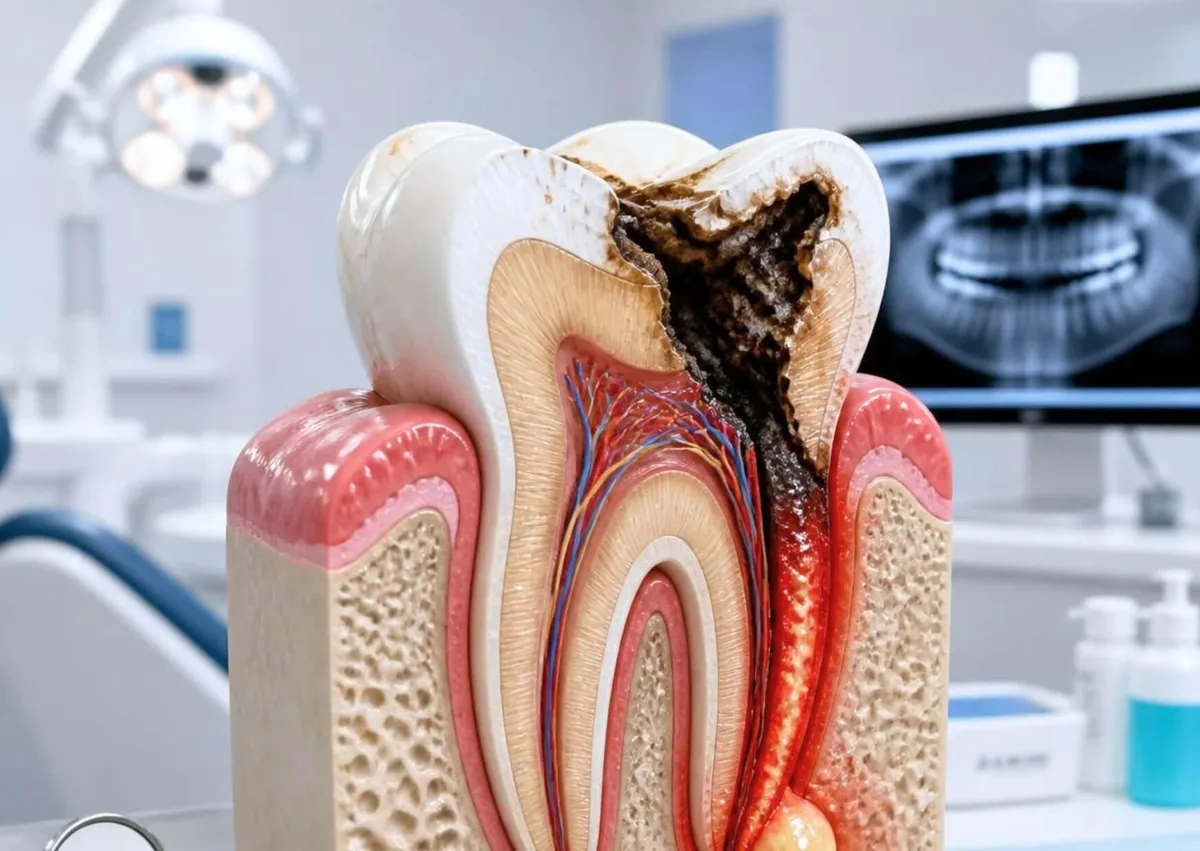
Cavities can look like white, brown, or black spots, small pits, or visible holes in a tooth. Early decay may be hard to see, though, and some cavities cause no symptoms at first, so a dentist may need a dental exam and X-rays to confirm what is happening.
If you’re noticing spots, pits, or unexplained sensitivity, a dental exam can clarify whether these changes are early enamel loss or a more advanced cavity. At Supremia Dentistry in Wake Forest, our general dentistry services focus on targeted exams, imaging, and preventive plans to protect teeth and avoid more extensive treatment.
What Do Cavities Look Like at Different Stages?
A cavity starts when acids from oral bacteria repeatedly remove minerals from enamel, the hard outer layer of the tooth. As that damage moves deeper, the tooth can change in color, texture, and shape.
|
Stage |
Possible Appearance |
Possible Symptoms |
|---|---|---|
|
Early mineral loss |
Chalky or dull white area, often near the gumline |
Usually none |
|
Enamel decay |
Light brown or dark spot, rough area, or small pit |
Mild sensitivity may occur |
|
Dentin decay |
Larger brown or black area or visible hole |
Sensitivity to sweets, heat, or cold |
|
Deep decay |
Significant opening, broken tooth structure, or darkened area |
Toothache, pain when biting, or lingering sensitivity |
These signs are helpful, but they are not enough to diagnose a cavity on their own. Some cavities form between teeth, under older dental work, or inside deep grooves where they are hard to see in a mirror.
What Do Cavities Look Like vs. Stains?
A stain often looks like a flat brown or black mark that does not weaken the tooth. Coffee, tea, tobacco, dark foods, and naturally pigmented grooves can all change tooth color.
Decay is more likely when a spot also feels rough, catches floss, forms a pit, or changes over time. Still, color alone does not confirm a cavity, and poking the area with a sharp object can irritate the gums or damage the tooth.
Other conditions can look similar. Tartar may appear yellow, brown, or black near the gumline, and enamel defects or harmless developmental marks can also look white or discolored.
What Do Cavities Look Like Between Teeth or Near Fillings?
Cavities between teeth may not be visible at all. Floss that repeatedly shreds or food that catches in the same spot can be clues, but X-rays are often needed to find decay there. For more details on signs in those areas, see signs of a cavity.
Decay near a filling or crown may show up as a dark edge, gap, chip, or softened area. However, dark margins can also be simple staining, so a dentist needs to examine the restoration and the surrounding tooth.
On roots exposed by gum recession, decay may look yellow-brown or dark and may feel softer than enamel decay. Root cavities can spread faster because root surfaces have less mineral protection than enamel.
How Cavities Affect Comfort and Long-Term Oral Health
Very early enamel damage often does not hurt. Once decay reaches dentin, the tooth may become sensitive to cold drinks, sweets, or brushing.
If decay gets deeper, it can irritate or infect the pulp, which contains the tooth’s nerves and blood vessels. That can lead to stronger pain, pain when biting, or lingering sensitivity.
Untreated decay can weaken the tooth, cause a fracture, or lead to an abscess. Because pain may not start until the damage is more advanced, waiting for symptoms can turn a small problem into more extensive treatment.
If you’re unsure whether your symptoms fit a cavity, read more about what a cavity feels like to compare common sensations.
How Dentists Check What Cavities Look Like and Choose Treatment
A dentist may examine the tooth under good lighting, review your symptoms, and take X-rays when needed. Treatment depends on the cavity’s depth, location, activity, and how much healthy tooth structure remains.
- Early enamel changes: Fluoride treatment and better plaque control may help stop or reverse mineral loss before a hole forms. Minimally invasive remineralization therapy may also support enamel repair.
- A formed cavity: A filling usually removes damaged tooth structure and restores shape and function. For more on materials and options, see composite fillings.
- Extensive damage: An inlay, onlay, or crown may be needed when a filling would not give the tooth enough support, including same-day crowns.
- Decay reaching the pulp: Root canal treatment and a final restoration may sometimes save the tooth.
- A tooth that cannot be restored: Extraction may be the best option after discussing replacement choices.
Most cavity treatment uses local anesthetic to keep the area comfortable. Mild tenderness or sensitivity can happen afterward, but worsening pain, a bite that feels off, or persistent symptoms should be reported to the dental office.
When a Suspected Cavity Needs Prompt Attention

Schedule an evaluation if a spot, pit, or sensitivity is new, persistent, worsening, or hard to explain. A visit is also a good idea for a broken tooth, pain when biting, food trapping, or floss that keeps tearing in one area.
Seek urgent dental care for severe or increasing tooth pain, facial or gum swelling, pus, fever, or trouble opening the mouth. Trouble breathing or swallowing, rapidly spreading swelling, or swelling near the eye requires emergency medical care.
Until you are seen, keep brushing gently with fluoride toothpaste and clean between the teeth daily. A dental exam can tell the difference between decay, staining, and other enamel changes so the least invasive treatment can be chosen.
If a suspicious spot, increasing sensitivity, or persistent discomfort is present, the next step is a focused dental exam and timely treatment to prevent more extensive care. Contact Supremia Dentistry for general dentistry in Wake Forest to discuss your options and arrange an appointment today at (984) 983-5865.
FAQs
Can a cavity be white instead of black?
Yes. Early mineral loss may appear as a chalky, dull white patch, especially near the gumline or around orthodontic brackets.
Can you have a cavity without seeing it?
Yes. Cavities can form between teeth, beneath restorations, or inside deep grooves, where they may only be found during an exam or on an X-ray.
Does every dark spot mean a cavity?
No. Dark spots may be stains, tartar, natural groove pigmentation, or color changes around a restoration. A dentist should still check any spot that is new, changing, or paired with sensitivity.
Can a visible cavity heal on its own?
An early area of mineral loss may sometimes be stopped or reversed before the surface breaks. Once a true hole forms, the missing tooth structure does not grow back and usually needs restorative care. For more on this topic, see Can a cavity heal.
How quickly can a cavity get worse?
The timeline varies based on oral hygiene, fluoride exposure, diet, dry mouth, tooth location, and other health factors. Because appearance and discomfort do not reliably show how deep decay is, timely evaluation is safer than waiting to see if it changes. If you want more on timing, read how long it takes for cavities to form.