
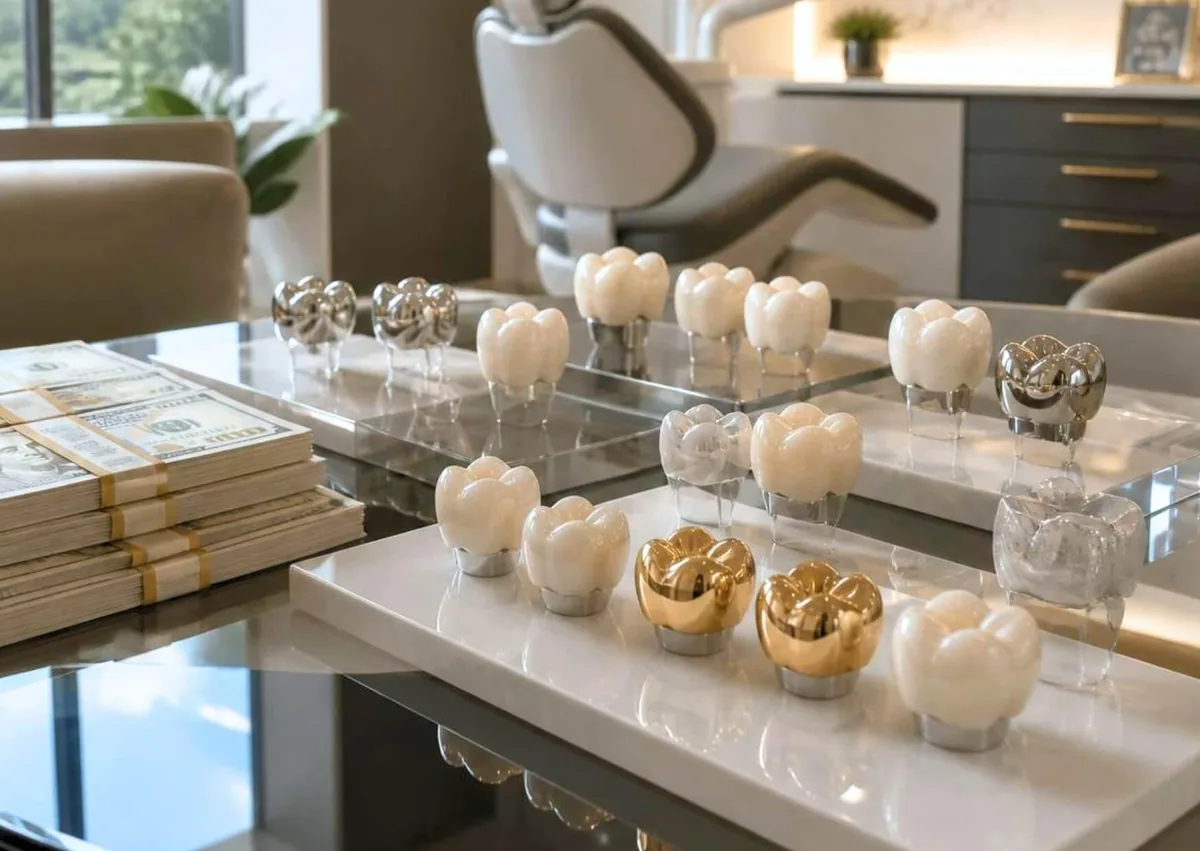
If your dentist says you need a crown, the main question is usually simple: which type of dental crown is best, and what will it cost? In the United States, a dental crown often costs about $800 to $2,500 per tooth before insurance, though premium materials, added treatment, and local fees can raise the total. Broad pricing data such as the US Dental Cost Index helps explain why crown fees can vary so much by location.
The most common crown types are zirconia, porcelain or ceramic, porcelain fused to metal, metal alloys, and resin. The right choice depends on where the tooth is, how hard you bite or grind, how natural you want it to look, how much healthy tooth remains, and your budget.
If you need a durable crown quickly because of a broken, painful, or cosmetically compromised tooth, same-day crowns can reduce time in the chair and limit interim problems. Supremia Dentistry in Wake Forest offers personalized same-day crowns so you can regain function and appearance with modern care.
Types of Dental Crowns and Cost at a Glance
These are broad U.S. estimates, not guaranteed fees. Ask whether the quote includes the exam, X-rays, temporary crown, final crown, and follow-up adjustments.
|
Crown Type |
Typical Cost Per Tooth Before Insurance |
Common Advantages |
Important Tradeoffs |
|---|---|---|---|
|
Zirconia |
$1,000 to $2,500 |
Strong, tooth-colored, useful for many front and back teeth |
May cost more; shade and translucency vary |
|
Porcelain or ceramic |
$1,000 to $2,500 |
Natural appearance, no metal |
Can chip or fracture under heavy force |
|
Porcelain fused to metal |
$900 to $2,000 |
Strength plus tooth-colored porcelain |
Porcelain may chip; a dark edge can show near the gum |
|
Gold or other metal alloy |
$800 to $2,500 or more |
Durable, conservative wear characteristics |
Metallic appearance; precious metal prices affect cost |
|
Resin or composite |
$600 to $1,500 |
Lower initial cost, tooth-colored |
Usually wears, stains, and fractures more readily |
Not every material works well for every tooth. The lab process, material quality, and the dentist’s preparation and bonding technique also affect how a crown looks, feels, and lasts.
Types of Dental Crowns and Cost by Material
Zirconia Crowns
Zirconia is a strong ceramic often chosen for teeth that handle heavy chewing force. Modern translucent zirconia can look more natural than older versions, although highly translucent options may trade some strength for appearance.
Zirconia may be a good fit for molars, bridges, or patients who grind their teeth. If clenching or grinding is part of the problem, a dentist may also recommend a nightguard after evaluation.
Porcelain and All-Ceramic Crowns
All-ceramic crowns can closely match the color and light reflection of natural enamel. They are often considered for visible front teeth and for people who want a metal-free option; a brief cosmetic dentistry consultation can help with material and shade selection.
Different ceramics have different strength and bonding needs. The best choice depends on bite pressure, tooth position, available space, and how much healthy tooth structure is left.
Porcelain-Fused-to-Metal Crowns
A porcelain-fused-to-metal crown has a metal base covered by tooth-colored porcelain. It has been used for many years and can offer dependable strength, but the porcelain layer can chip over time.
If the gums recede, the metal underneath may create a darker line near the edge of the crown. That matters more for front teeth than for less visible back teeth.
Gold and Other Metal Crowns
Metal crowns are very durable and can often be made thinner than some other crown types. In some cases, that means less natural tooth structure needs to be removed.
Gold alloys also tend to wear in a way that is gentle on opposing teeth when they are properly designed and polished. The main drawback is appearance, and pricing can rise when precious metal costs increase.
Resin Crowns
Resin crowns usually cost less upfront and can be matched to tooth color. However, they tend to stain, wear down, and fracture sooner than stronger ceramic or metal options.
Resin is also commonly used for temporary crowns while a permanent crown is being made. Ask whether a proposed resin crown is temporary or intended as a longer-term restoration.
What Affects Types of Dental Crowns and Cost?
The crown itself is only part of the total price. Your final cost can also depend on location, tooth position, material choice, lab fees, digital scanning, sedation, and how much rebuilding the tooth needs.
Some teeth need a filling or core buildup before the crown can be placed. Others may also need root canal treatment, gum treatment, or crown-lengthening surgery, though those procedures are not automatically required with every crown.
For front teeth that need endodontic care, you can read more about a root canal on front tooth. If a tooth cannot be saved, an extraction followed by dental implants may be a more appropriate replacement option with a different cost and timeline.
Insurance often classifies crowns as major restorative care and may pay a percentage after the deductible. Annual maximums, waiting periods, replacement rules, frequency limits, and network status can all change your out-of-pocket cost.
Ask for a written treatment estimate and, when possible, a pretreatment estimate from your insurer. It is not a guarantee of payment, but it can help you understand exclusions and likely patient responsibility.
Why Dental Crown Choice Matters for Comfort and Long-term Health
A crown covers and protects a weakened tooth, restores its shape, and helps spread chewing pressure more evenly. Dentists often recommend crowns after a large filling, fracture, root canal, severe wear, or decay that leaves too little healthy tooth for a filling alone.
A well-made crown can improve comfort and function, but it does not make the tooth decay-proof. Plaque can still collect where the crown meets the tooth, and decay or gum inflammation can develop if that area is hard to clean.
Waiting too long to treat a cracked or weakened tooth can lead to more fracture, pain, infection, or loss of tooth structure. If you have biting pain, ongoing sensitivity, or a broken tooth, it is safer to get it evaluated than to keep watching it.
Seek prompt dental care for facial swelling, fever, pus, rapidly worsening pain, trauma, or trouble swallowing or breathing. Difficulty breathing or spreading swelling can be an emergency and needs immediate medical attention.
What to Expect When Getting a Dental Crown

Your dentist starts by examining the tooth and may take X-rays to check the root, surrounding bone, decay, and any previous treatment. The tooth is then shaped, and damaged areas may be rebuilt to create a stable base.
A scan or impression records the tooth and your bite. Many crowns are made by a lab and require a temporary crown, while some offices can create certain same-day crowns in one visit using digital technology.
At the fitting visit, the dentist checks the crown’s bite, shape, shade, margin, and contact with nearby teeth before bonding or cementing it. Mild gum tenderness or short-term temperature sensitivity can happen, but a crown that feels high, loose, or persistently painful should be checked.
How to Compare Crown Cost, Appearance, and Durability
There is no single crown material that is best for everyone. Many crowns last for years, but longevity depends on fit, oral hygiene, decay risk, bite forces, diet, and whether the supporting tooth has enough sound structure.
For a front tooth, appearance may matter most. If you are comparing crowns and veneers, see front teeth crowns vs. veneers and learn how long veneers last.
For a back tooth that handles heavy chewing or grinding, strength and available thickness may matter more. The lowest initial price is not always the best long-term value, and the most expensive option is not automatically the best clinical fit.
A useful recommendation should explain why a specific material fits your tooth and what reasonable alternatives exist. That helps you balance comfort, appearance, durability, and budget with less guesswork.
How to Care for a Dental Crown After Treatment
Brush twice a day with fluoride toothpaste and clean between the crown and nearby teeth every day. If the crown supports a bridge, a floss threader, interdental brush, or water flosser may help clean underneath.
Avoid chewing ice or using your teeth to open packages. Those habits can damage both crowns and natural teeth.
Keep regular dental visits so the crown margin, bite, gums, and supporting tooth can be monitored. Before you move forward, ask about the diagnosis, material options, expected total cost, insurance estimate, and likely lifespan for your specific tooth.
For a clear estimate and to confirm whether a same-day crown suits your tooth, ask for a clinical exam and a written treatment plan. Call Supremia Dentistry for same-day crowns in Wake Forest at (919) 556-6200 to discuss options and schedule your consultation.
FAQs
Which type of dental crown is usually the cheapest?
Resin crowns often have the lowest initial fee, though prices vary and they may not last as long as stronger materials. Insurance coverage and any added tooth treatment can affect your total more than the material price alone.
What is the best crown for a front tooth?
All-ceramic crowns are often considered for front teeth because they can provide lifelike color and translucency. Zirconia or porcelain-fused-to-metal may be better in some cases depending on bite force, tooth color, remaining structure, and cosmetic priorities.
What is the best crown for a back tooth?
Zirconia and metal crowns are commonly considered for back teeth because they can tolerate strong chewing forces. Other ceramics and porcelain-fused-to-metal crowns can also work when they are selected and designed for the individual bite.
Does dental insurance cover crowns?
Many dental plans cover part of a crown when it is medically necessary, often after a deductible and subject to an annual maximum. Waiting periods, frequency rules, downgrades, cosmetic exclusions, and network status may limit benefits.
Can a crown be placed without a root canal?
Yes. Many crowned teeth do not need root canal treatment, which is usually considered when the pulp, the soft tissue inside the tooth that contains nerves and blood vessels, is irreversibly inflamed or infected. If you want more detail about endodontic outcomes, read about how long root canals last.
How long does a dental crown last?
A crown may last many years, but no exact lifespan can be promised. Decay at the edge, fracture, gum changes, grinding, trauma, and problems with the supporting tooth can all lead to earlier replacement. See how long crowns last.