
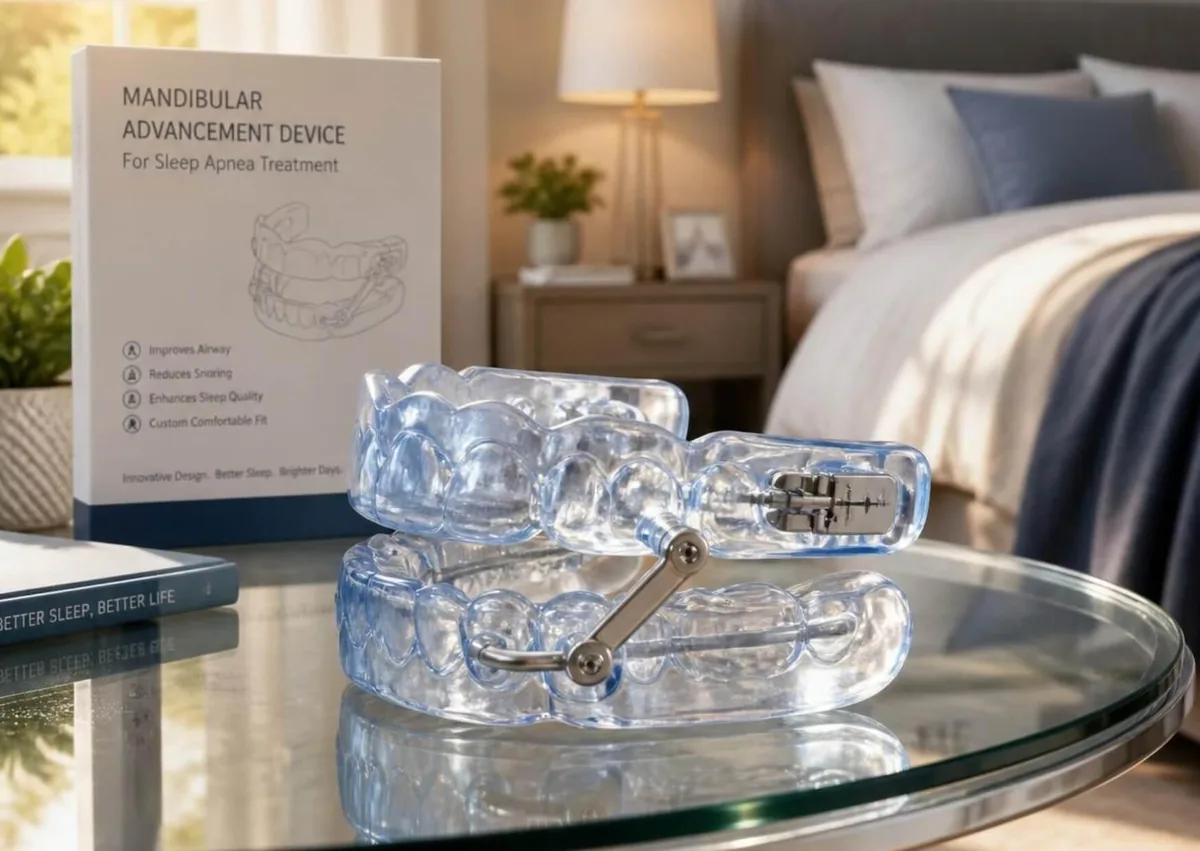
If snoring or mild to moderate obstructive sleep apnea is affecting your sleep, a mandibular advancement device may help by keeping your airway more open at night. This custom oral appliance gently moves your lower jaw forward and is often a good option for adults with primary snoring or mild to moderate sleep apnea, especially if CPAP is hard to tolerate.
A mandibular advancement device should only be used after a proper sleep evaluation. A dental-based evaluation for sleep apnea treatment can help determine whether an oral appliance is appropriate and support coordinated medical and dental follow-up.
If snoring or suspected sleep apnea is affecting your rest, a focused dental evaluation for sleep apnea treatment can clarify whether an oral appliance is the right step. At Supremia Dentistry in Wake Forest, our team provides personalized, full-service dental care to identify the best treatment pathway and support comfortable long-term results.
How a Mandibular Advancement Device Helps Keep the Airway Open
During sleep, the tongue and soft tissues in the throat can relax backward. In obstructive sleep apnea, that narrowing can repeatedly block airflow and lead to breathing pauses, oxygen drops, and brief awakenings.
A mandibular advancement device moves the lower jaw slightly forward. That forward position can also help bring the tongue forward and create more space behind it.
The goal is steadier airflow during sleep. It is not simply a device that keeps the teeth apart.
Most mandibular advancement devices fit over the upper and lower teeth. Custom versions are often adjustable, so a qualified dentist can advance the jaw gradually while balancing symptom relief with comfort.
Who a Mandibular Advancement Device May Help
This type of oral appliance may help adults with primary snoring or diagnosed mild to moderate obstructive sleep apnea. It may also be considered for some people with more severe sleep apnea who cannot tolerate CPAP, but that decision should involve the medical clinician managing the condition.
Suitability depends on more than the sleep study result. A dentist will usually check the teeth, gum health, bite, existing dental work, jaw movement, and any history of TMJ symptoms.
If jaw pain or dysfunction is already present, some patients may need TMJ treatment before or during oral appliance therapy. That helps protect comfort and improve the chance of long-term success.
A mandibular advancement device may not be the right fit if there are too few stable teeth for support, active gum disease, untreated decay, limited ability to move the jaw forward, or certain jaw-joint problems. People with dentures or significant tooth loss may need a clinician experienced with alternative appliance designs.
Children should not use an adult-style device without specialist evaluation. Their jaws and teeth are still developing, and pediatric snoring or breathing pauses should be assessed by a pediatrician or sleep specialist.
Mandibular Advancement Device vs. CPAP: Which Is Better?
CPAP uses pressurized air through a mask and is generally the most effective treatment for reducing breathing interruptions across all levels of obstructive sleep apnea. A mandibular advancement device is smaller, quieter, and easier to travel with, but its results vary based on anatomy, fit, and consistent use.
When CPAP is not tolerated, some patients look for other ways to manage sleep apnea without a CPAP. The best option is the one that controls the condition well enough and can be used consistently.
|
Consideration |
Mandibular Advancement Device |
CPAP |
|---|---|---|
|
Main action |
Holds the lower jaw forward |
Uses air pressure to keep the airway open |
|
Typical role |
Snoring and mild to moderate apnea; selected CPAP-intolerant cases |
Mild through severe apnea |
|
Advantages |
Portable, quiet, no mask or machine |
Usually provides the strongest control of apnea |
|
Common challenges |
Jaw soreness, tooth pressure, bite changes |
Mask discomfort, dryness, air leaks |
|
Follow-up |
Dental adjustment plus sleep reassessment |
Medical monitoring and equipment adjustments |
Convenience should not replace effectiveness. That matters even more when sleep apnea is moderate or severe or when heart and lung conditions are involved.
Custom Mandibular Advancement Device vs. Store-Bought Mouthpiece
Custom appliances are made from dental impressions or digital scans. They are designed around your bite, tooth support, and jaw range of motion.
The American Academy of Sleep Medicine and the American Academy of Dental Sleep Medicine recommend a custom, titratable appliance prescribed and fitted by a qualified dentist when oral appliance therapy is used for obstructive sleep apnea.
Store-bought products may soften in hot water and mold around the teeth, but the fit and jaw position can be unpredictable. They may cause discomfort or tooth movement, and quieter snoring does not prove that sleep apnea or oxygen changes are under control.
A standard nightguard is also different from a mandibular advancement device. A nightguard mainly protects teeth from grinding, while an advancement appliance is designed to reposition the lower jaw to support airflow.
What to Expect When Getting a Mandibular Advancement Device
Treatment usually starts with a medical sleep evaluation. That may include a home sleep apnea test or an overnight sleep study.
A dentist trained in dental sleep medicine then examines the teeth, gums, bite, jaw joints, and jaw movement before the appliance is made. This helps confirm that the mouth can safely support the device.
After delivery, the appliance is usually adjusted in small steps over several visits. Moving the jaw forward too quickly can increase soreness, while too little advancement may not improve breathing enough.
Early side effects can include extra saliva, dry mouth, tooth pressure, temporary morning bite changes, or mild soreness in the chewing muscles and jaw joints. These often improve as the patient adapts and the device is adjusted.
Persistent pain or bite changes should be checked promptly. They are not something to ignore or push through.
Comfort, Oral Health, and Long-Term Monitoring With a Mandibular Advancement Device
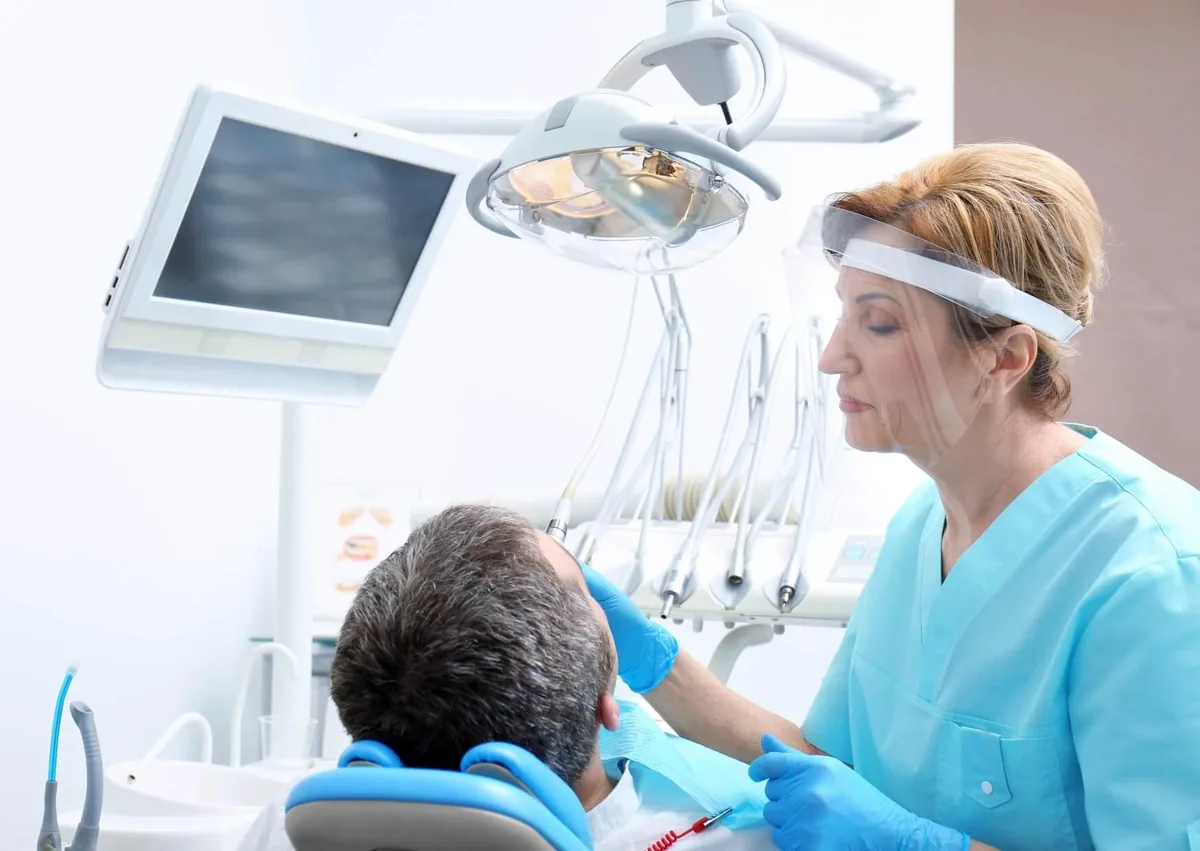
Long-term follow-up is important because teeth can shift, dental work can change the fit, and the appliance can wear down over time. A repeat sleep study is often recommended after adjustment to confirm that treatment is actually controlling sleep apnea.
Patients are usually told to clean the appliance according to the manufacturer’s instructions and store it in a ventilated case. Good home care and regular general dentistry visits help maintain the healthy teeth and gums the device depends on.
Over months or years, some people develop changes in tooth position or in the way the upper and lower teeth meet. Regular dental exams help document those changes early and guide adjustments, exercises, or a change in treatment if needed.
Contact the treating dentist if the device no longer fits, cracks, causes worsening jaw pain, or if teeth feel loose. Also seek care if your bite does not return toward normal after removing the appliance in the morning.
Do not try to reshape or force the appliance into place on your own. Professional adjustment is safer and helps protect both comfort and long-term oral health.
Seek urgent medical care for severe breathing difficulty, chest pain, fainting, confusion, or blue or gray lips. Loud snoring with witnessed breathing pauses, choking during sleep, severe daytime sleepiness, morning headaches, or drowsy driving should also prompt timely medical assessment.
Choosing the Next Step for Snoring or Sleep Apnea
If snoring is persistent, getting worse, or happening with breathing pauses or daytime fatigue, start with a medical sleep evaluation rather than buying an appliance on your own. A sleep clinician can confirm the diagnosis and severity, and a qualified dentist can determine whether your teeth, gums, bite, and jaw can safely support oral appliance therapy.
Your best option may be a mandibular advancement device, CPAP, another treatment, or a combination approach. The safest path is an individualized plan based on sleep-study findings, anatomy, health history, and what you can use comfortably over time.
For a clear diagnosis and individualized plan, arrange a dental-centered sleep assessment and appliance consultation. Contact Supremia Dentistry for sleep apnea treatment in Wake Forest at (984) 983-5865 to schedule your consultation today.
FAQs
Can a mandibular advancement device stop snoring?
It can reduce snoring in many people by creating more space in the airway. But quieter snoring does not prove that obstructive sleep apnea is controlled, so proper testing and follow-up still matter.
Is a mandibular advancement device painful?
Mild tooth pressure, extra saliva, or temporary jaw-muscle soreness can happen during the adjustment period. Significant or ongoing pain should be assessed by the treating dentist.
How long does a mandibular advancement device last?
Its lifespan depends on the design, tooth grinding, home care, dental changes, and how often it is used. Regular checkups help catch wear, poor fit, or bite changes before they affect comfort or effectiveness.
Does insurance cover a mandibular advancement device?
Coverage varies by plan and diagnosis. When it is prescribed for obstructive sleep apnea, it is often handled through medical rather than dental insurance, and a plan may require a sleep study, proof of medical necessity, or prior authorization.