
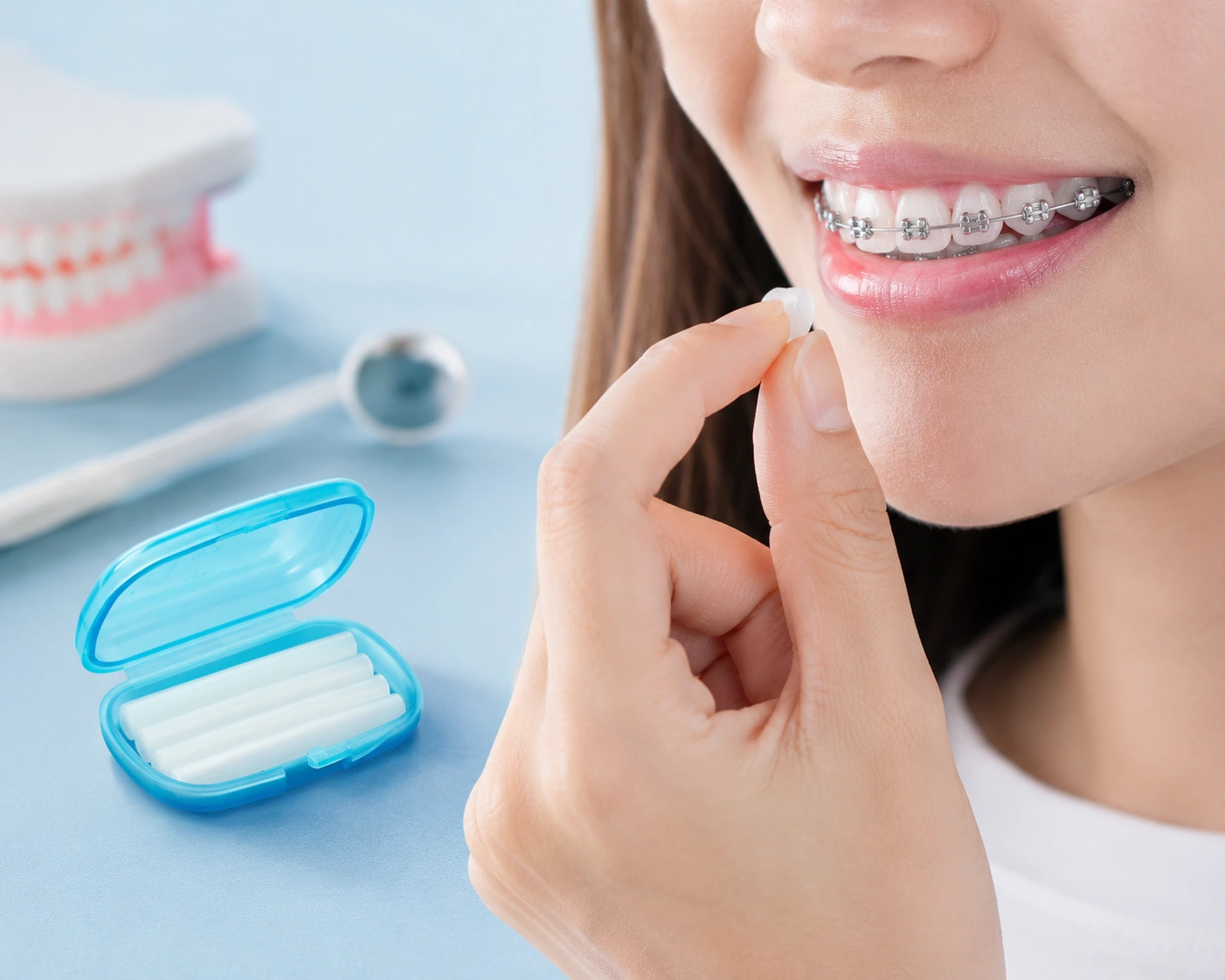
Orthodontic wax is a soft medical-grade material designed to temporarily cover braces, brackets, or protruding wires that irritate oral tissues. Wax creates a smoother surface over orthodontic hardware, which may help reduce friction against the cheeks, lips, gums, and tongue during speaking, chewing, and sleeping.Supremia Dentistry provides patient-focused orthodontic treatment for patients experiencing braces discomfort, bite alignment concerns, or appliance-related irritation during active tooth movement.
Orthodontists commonly recommend wax for:
- Sharp bracket edges
- Protruding wires
- New braces adjustments
- Lip irritation
- Cheek abrasion
- Localized mouth soreness
Patients with newly placed braces often notice temporary sensitivity during the first several days of treatment because oral tissues are adapting to new appliance surfaces.
According to the American Association of Orthodontists, temporary irritation is common during early orthodontic treatment stages.
Quick Facts
What it is: A soft protective material placed over braces or wires to reduce mouth irritation
Who it is for: Patients with braces, protruding wires, bracket irritation, or orthodontic mouth sores
Main benefits: Helps reduce friction, cushion soft tissues, improve comfort, and protect irritated areas
Limitations: Does not repair broken braces or correct orthodontic appliance problems
Timeline / durability: Wax may remain effective for several hours and is commonly replaced after meals or brushing
Why Braces Cause Mouth Irritation
Braces create new pressure points inside the mouth that may increase soft tissue friction.
Cheeks, lips, and tongue tissues move continuously during:
- Speaking
- Chewing
- Swallowing
- Sleeping
- Facial movement
Repeated movement may increase contact between orthodontic hardware and sensitive oral tissues, especially during the first several days after braces placement or adjustment appointments.
Common causes of braces-related irritation include:
- Tightened wires
- Sharp bracket corners
- Shifted wire edges
- Repeated cheek contact
- Increased mouth dryness
- Nighttime clenching
For example, a wire extending slightly beyond the back bracket may repeatedly rub against cheek tissue and contribute to soreness or small mouth ulcers.
Most oral tissues gradually adapt as orthodontic treatment progresses.
How Orthodontic Wax Works
Orthodontic wax creates a protective barrier between braces and soft tissues.
Covering rough appliance surfaces may help reduce repeated pressure during normal mouth movement.
Orthodontic wax may help:
- Cushion bracket edges
- Reduce wire irritation
- Protect inflamed tissue
- Improve speaking comfort
- Reduce lip sensitivity
- Minimize friction during chewing
Wax does not stop tooth movement or change orthodontic treatment progress. Instead, it temporarily improves comfort while tissues adapt to braces or while patients wait for appliance adjustments.
If one bracket or wire repeatedly presses into the same tissue area, irritation may gradually worsen and contribute to mouth sores or localized inflammation.
Patients with ongoing appliance discomfort sometimes discuss Invisalign because clear aligners may reduce certain bracket-related irritation depending on bite complexity and orthodontic goals.
When Orthodontic Wax Should Be Used
Orthodontic wax is commonly used when braces begin causing noticeable irritation or friction.
Common situations include:
- Newly placed braces
- Orthodontic adjustment appointments
- Protruding wires
- Shifted brackets
- Sports-related irritation
- Nighttime appliance pressure
- Increased cheek sensitivity
Many patients notice greater oral sensitivity within 24 to 72 hours after braces adjustments because orthodontic pressure temporarily changes tooth movement forces.
Wax is typically most helpful during:
- Early braces treatment
- Wire adjustment phases
- Temporary appliance irritation
- Minor mouth sore development
If irritation continues despite wax placement, orthodontic evaluation may help identify appliance positioning problems or wire instability.
How to Apply Orthodontic Wax Correctly
Orthodontic wax generally works best when applied to dry appliance surfaces.
Patients commonly apply wax using these steps:
- Wash hands thoroughly
- Brush teeth gently if possible
- Dry the irritating bracket or wire
- Roll a small piece of wax into a ball
- Press the wax directly onto the irritation source
- Smooth the edges gently
Dry brackets usually improve wax adhesion because excess saliva and moisture may reduce retention.
Many orthodontists recommend replacing wax:
- After meals
- After brushing
- When loosened
- When contaminated
- When irritation returns
If wax repeatedly falls off, additional drying may improve stability.
How Long Orthodontic Wax Typically Lasts
Orthodontic wax may remain effective for several hours depending on chewing activity and saliva exposure.
Retention time often depends on:
- Speaking frequency
- Chewing intensity
- Appliance location
- Moisture exposure
- Oral hygiene habits
Wax placed on back molar brackets may loosen faster because chewing pressure increases friction and saliva exposure.
Most orthodontic wax products are considered non-toxic, which means accidental swallowing of small amounts generally does not create serious concerns.
However, contaminated or discolored wax is typically replaced to help maintain cleanliness and reduce bacterial buildup.
Can Orthodontic Wax Help Mouth Sores?
Orthodontic wax may help reduce continued irritation around braces-related mouth sores.
Braces-related sores commonly develop because:
- Brackets repeatedly contact soft tissue
- Wires create localized pressure
- Swelling increases sensitivity
- Chewing intensifies friction
- Dry mouth worsens irritation
Wax does not directly heal ulcers or sores, but it may help reduce ongoing mechanical irritation while tissues recover naturally.
Patients with recurring oral irritation sometimes benefit from general dentistry evaluations because oral dryness, enamel irritation, or bite imbalance may contribute to ongoing discomfort.
Can Orthodontic Wax Be Used on Broken Wires?
Orthodontic wax may temporarily cover protruding wires or rough appliance edges until professional repair becomes available.
Wax may help reduce:
- Cheek abrasions
- Tongue irritation
- Gum soreness
- Lip sensitivity
- Sharp wire contact
For example, a displaced wire may begin pressing into cheek tissue during chewing or speaking. Wax may temporarily cushion the area until orthodontic adjustment is completed.
Wax does not repair orthodontic appliances. If appliance damage causes:
- Severe pain
- Swelling
- Bleeding
- Loose brackets
- Wire instability
Professional evaluation is generally recommended.
Patients experiencing painful appliance complications sometimes seek emergency dentist evaluations when orthodontic discomfort becomes difficult to manage comfortably.
Orthodontic Wax vs Orthodontic Silicone
Orthodontic wax and orthodontic silicone both reduce appliance-related irritation, although they differ in texture and durability.
Orthodontic Wax
- Softer texture
- Easier to mold
- Better for short-term irritation
- Replaced more frequently
Orthodontic Silicone
- Firmer texture
- Longer-lasting coverage
- More stable during chewing
- Often used for persistent irritation
Treatment recommendations usually depend on:
- Appliance type
- Irritation severity
- Wire positioning
- Patient preference
- Chewing habits
Patients with mild irritation often prefer wax because it adapts quickly to changing appliance surfaces.
What Orthodontic Wax Cannot Fix
Orthodontic wax improves temporary comfort but does not correct orthodontic problems.
Wax cannot repair:
- Detached brackets
- Broken appliances
- Severe wire displacement
- Bite alignment problems
- Orthodontic infections
- Significant swelling
A loose bracket may stop rubbing temporarily after wax placement, but orthodontic repair is still typically necessary to maintain tooth movement accuracy.
If appliance instability continues untreated, orthodontic progress may become less predictable over time.
What Happens If Orthodontic Irritation Is Ignored?
Repeated appliance friction may gradually increase tissue inflammation when irritation remains unmanaged.
Untreated orthodontic irritation may contribute to:
- Mouth sore progression
- Chronic cheek inflammation
- Eating difficulty
- Speaking discomfort
- Lip swelling
- Reduced treatment compliance
A protruding wire repeatedly contacting the same tissue area may gradually worsen inflammation and increase discomfort during daily activities.
Early orthodontic adjustments may help reduce appliance-related complications before irritation becomes more significant.
FAQ
Is orthodontic wax safe to swallow?
Small amounts of orthodontic wax are generally considered non-toxic and are commonly swallowed accidentally without serious concerns.
How often should orthodontic wax be replaced?
Orthodontic wax is usually replaced after meals, brushing, or whenever it loosens or becomes contaminated.
Can orthodontic wax stop braces pain?
Orthodontic wax may help reduce appliance irritation, but it does not eliminate pressure caused by active tooth movement.
Can I sleep with orthodontic wax on my braces?
Many patients wear orthodontic wax overnight because braces pressure may feel more noticeable during sleep.
Why does orthodontic wax keep falling off?
Wax may loosen if brackets remain wet before application. Thorough drying may help improve adhesion.
Can orthodontic wax help with broken braces?
Wax may temporarily cushion rough brackets or protruding wires, but damaged appliances still typically require orthodontic repair.
What to Do Next
Orthodontic irritation commonly develops when brackets, wires, or appliance edges repeatedly contact sensitive oral tissues during active tooth movement. Mild irritation may initially cause temporary soreness, while ongoing friction may contribute to mouth sores, lip sensitivity, or difficulty chewing comfortably.
If you are noticing recurring cheek irritation, protruding wire discomfort, mouth ulcers, or soreness after braces adjustments, an orthodontic evaluation may help identify factors contributing to irritation and determine whether appliance modifications or protective strategies are appropriate.
Supremia Dentistry can evaluate orthodontic discomfort, review appliance findings, and discuss options that may help improve comfort during treatment. Request a consultation to examine your orthodontic concerns, identify possible sources of irritation, and learn which adjustments or comfort strategies may help support a more comfortable treatment experience.