
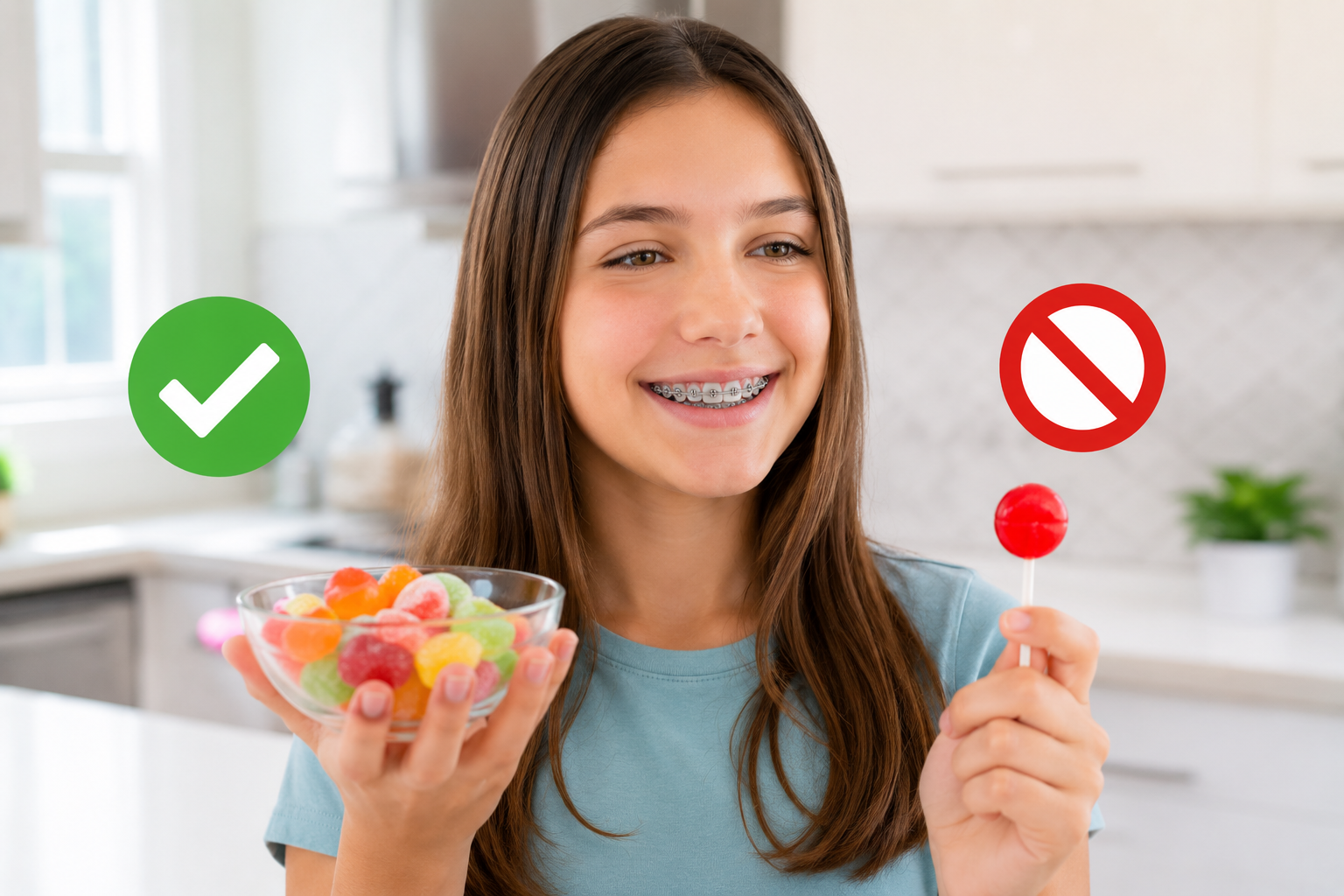
Candy with braces may be acceptable, but only certain types carry lower risk. Hard, sticky, and chewy candies can damage brackets or wires, while softer options in moderation may reduce strain on orthodontic appliances. At Supremia Dentistry, recommendations focus on protecting braces while supporting realistic daily habits.
Braces move teeth using controlled force during physiologic orthodontics. Excess pressure from certain foods can interfere with this process and may lead to appliance damage, discomfort, or longer treatment timelines. Food texture, frequency, and eating habits all influence how braces respond during treatment.
Quick Facts
What it is: Dietary guidance for patients with braces
Who it is for: Individuals with fixed orthodontic appliances
Main benefits: Helps protect brackets and supports treatment progress
Limitations: Requires consistent food choices and hygiene habits
Timeline / durability: Applies throughout orthodontic treatment
What Happens If You Eat Candy With Braces?
Candy increases both physical strain on braces and sugar exposure, which can affect appliance stability and enamel health.
Common outcomes include:
- Bracket damage from hard candy
- Wire distortion from sticky or chewy candy
- Plaque buildup due to sugar
- Treatment delays from repairs
For example, chewing caramel may pull on brackets and cause detachment.
Frequent candy consumption without proper care may slow orthodontic progress and increase the need for repairs over time.
Which Candies Are Safer With Braces?
Soft, non-sticky candies are generally lower risk because they require less force and do not adhere to brackets.
Safer options include:
- Plain chocolate that melts easily
- Peanut butter-based candy with a softer texture
- Soft baked treats with minimal resistance
- Sugar-free candy that may reduce cavity risk
For example, eating a small portion of chocolate after meals places less stress on braces than hard candy.
If a candy dissolves quickly and does not stick, it is typically a safer option. Portion size and timing also play an important role.
Which Candies Should Be Avoided?
Hard, sticky, and chewy candies create the highest risk due to pressure and adhesion.
Avoid:
- Hard candy that may crack brackets
- Caramel or toffee that sticks to wires
- Gummy candy that pulls on appliances
- Jawbreakers or lollipops when bitten, as they create excessive pressure
For example, biting a jawbreaker may result in immediate bracket damage.
Why Sticky Candy Creates More Problems
Sticky candy combines physical strain with prolonged sugar exposure, making it one of the highest-risk choices.
Key concerns include:
- Adhesion to brackets, making it difficult to remove
- Extended sugar contact with teeth
- Pulling forces that may loosen bonded components
If residue remains around brackets, plaque can accumulate more easily and increase the risk of enamel changes.
How Sugar Affects Teeth During Orthodontic Treatment
Sugar increases acid production in the mouth, which may affect enamel during treatment.
Effects include:
- Plaque formation from bacteria feeding on sugar
- White spot lesions from early enamel demineralization
- Cavities forming around brackets where cleaning is more difficult
If oral hygiene is inconsistent, these issues may become visible during or after treatment. Maintaining strong hygiene habits and regular general dentistry care can help reduce these risks.
How to Eat Candy More Safely With Braces
Candy should be consumed with controlled habits and proper hygiene.
Recommended practices:
- Choose soft candy only
- Limit portion size
- Avoid biting with front teeth
- Eat candy with meals instead of frequent snacking
- Clean teeth shortly after eating
For example, eating chocolate after a meal and brushing afterward can reduce sugar exposure time.
Best Practices After Eating Candy
Post-candy care helps reduce plaque buildup and protect enamel.
Recommended steps:
- Brush thoroughly around brackets
- Floss carefully between teeth
- Use fluoride toothpaste
- Rinse with water if brushing is delayed
If sugar residue remains, bacteria may continue producing acid that affects enamel.
Better Alternatives to Candy
Lower-risk alternatives can reduce both pressure on braces and sugar exposure.
Consider:
- Soft fruits such as bananas and berries
- Yogurt or dairy snacks
- Smoothies
- Small portions of dark chocolate
Choosing these options more often may help protect orthodontic appliances while still satisfying cravings.
How Frequency of Candy Intake Affects Risk
How often candy is consumed plays a major role in overall risk.
Key patterns include:
- Frequent snacking increases sugar exposure
- Eating candy with meals reduces impact
- Nighttime consumption may increase enamel risk due to lower saliva production
Limiting candy to mealtimes can help reduce overall effects on teeth and braces.
How Bite Forces Influence Candy Risk
Bite force determines how much strain is placed on orthodontic components.
Key factors include:
- Back teeth generate higher pressure
- Front teeth experience more direct force when biting
- Uneven bite may concentrate stress in certain areas
Higher bite force increases the importance of avoiding hard and sticky foods.
Behavioral Habits That Increase Risk
Daily habits can increase risk beyond food choices alone.
Common behaviors include:
- Frequent sugary snacking
- Chewing ice or non-food objects
- Clenching while eating
- Inconsistent oral hygiene
Improving these habits can support better appliance stability and treatment progress.
Candy vs Orthodontic Treatment Options
Different orthodontic systems respond differently to food exposure.
- Traditional braces are fixed and more sensitive to certain foods
- Clear aligners can be removed before eating, allowing more flexibility
However, aligners must be worn consistently to remain effective.
Signs Candy Is Affecting Your Braces
Watch for these signs that candy may be causing issues:
- Loose or broken brackets
- Bent or protruding wires
- Persistent food trapping
- Increased tooth sensitivity
If these occur, a professional evaluation may help prevent further complications. In urgent cases, visiting an emergency dentist can help address damage quickly.
Long-Term Impact of Diet on Orthodontic Results
Diet consistency plays an important role in treatment success.
Key outcomes include:
- Fewer repairs leading to smoother progress
- Better oral hygiene supporting enamel health
- Reduced strain improving appliance stability
Following dietary recommendations can help treatment progress more predictably.
Managing Cravings During Treatment
Cravings can be managed with structured habits instead of complete restriction.
Helpful strategies include:
- Eating balanced meals to reduce sugar cravings
- Staying hydrated to limit snacking urges
- Planning occasional treats instead of frequent intake
- Choosing desserts that dissolve quickly
Planned consumption helps reduce overall sugar exposure.
FAQ
Can I eat candy occasionally with braces?
Candy may be eaten occasionally if softer types are chosen and oral hygiene is maintained afterward.
Is chocolate safe with braces?
Plain chocolate is generally lower risk because it melts and requires minimal chewing.
What happens if a bracket breaks from candy?
A broken bracket may require repair and could affect treatment timing depending on severity.
Are sugar-free candies better?
Sugar-free candy may reduce decay risk but can still damage braces if hard or sticky.
Can braces increase cavity risk when eating candy?
Braces can make cleaning more difficult, which may increase the risk of plaque buildup and gum disease if sugar is not removed.
How often can I eat candy with braces?
Candy is best limited to occasional intake and consumed during meals rather than frequent snacking.
Do I need to avoid candy completely?
Complete avoidance is not always necessary, but choosing lower-risk options is strongly recommended.
What to Do Next
Candy consumption during orthodontic treatment requires balancing enjoyment with protection. Food texture, frequency, and oral hygiene all influence how braces perform over time.
If you are noticing loose brackets, increased sensitivity, or difficulty cleaning around your braces, it may be time to adjust your habits. Choosing safer foods and improving oral hygiene can help reduce complications.
If you have concerns about your braces or diet, submit an appointment request with Supremia Dentistry. A professional evaluation can help protect your orthodontic progress and support long term oral health.